Mastering the climb to the top of PhD mountain
by Cherene de Bruyn
PUBLISHED: 27 August 2025 on Substack
“A man on a thousand-mile walk has to forget his goal and say to himself every morning, ‘Today I’m going to cover twenty-five miles and then rest up and sleep.” ― Leo Tolstoy, War and Peace, 1867
Imagine standing at the base of a towering mountain, knowing that the summit is a thousand miles away. The path is winding, sometimes lonely, and filled with unexpected challenges—much like the journey of earning a PhD. Every step forward is an act of determination, and the climb is not just about reaching the top, but about discovering your own resilience, resourcefulness, and grit along the way.
The problem many PhD students face is that along the way, our paths can diverge and change as a result of different distractions pulling our attention away from our goal. If this happens, it becomes increasingly difficult to maintain a consistent pace, easier to trip and fall, ultimately stopping us from covering the planned 25 miles. This can lead to delayed progress, impacting the timeline from when we planned to reach the final destination.
So how then do we stay on track, climbing the PhD mountain with focus? In this article, I will reveal some practical strategies that can turn that intimidating mountain into a series of manageable milestones. Whether you’re battling distractions, struggling with motivation, or just need a reminder that progress is possible, this guide will help you stay focused and energized for the road ahead.
Planning
If you have gone camping, you know trips like these take some careful planning. Unless you are Bear Grylls - the ultimate survival expert and adventurer - very few of us will be able to survive without a plan and a few necessities. The journey begins by seeking to inculcate the values of discipline and perseverance through daily and weekly habits. Map out the series of tasks that will allow you to reach your milestones. Schedule these tasks in your calendar or time block when you need to be in the field or lab. Make sure the tasks are manageable. Having a consistent pace will be better than trying to fit in too much in one go.
Stay clear of distractions - The power of No
Road trips are my favourite. There are probably very few people who wouldn’t agree. Growing up in South Africa, my parents would take our family across the country to different places during our school vacations. One thing that got everybody excited on the road to our holiday destinations was spotting a local “padstal” or farm stall on the way. Without a doubt, many South African families would pull over, hop out, and explore the various homemade treats and snacks being sold. “Padstals” are located along long stretches of highways cutting through the vast open farm areas. Away from busy cities, this also meant everything was done at a slower pace. Service was calm and unhurried. A stop a the “padstal” was never quick. Pulling over to explore the “padstal” definitely added a few more hours to your journey. While following distractions is sometimes needed, like letting your mind wander, and can also be a way to explore or view a topic. However, too many of them can be serious.
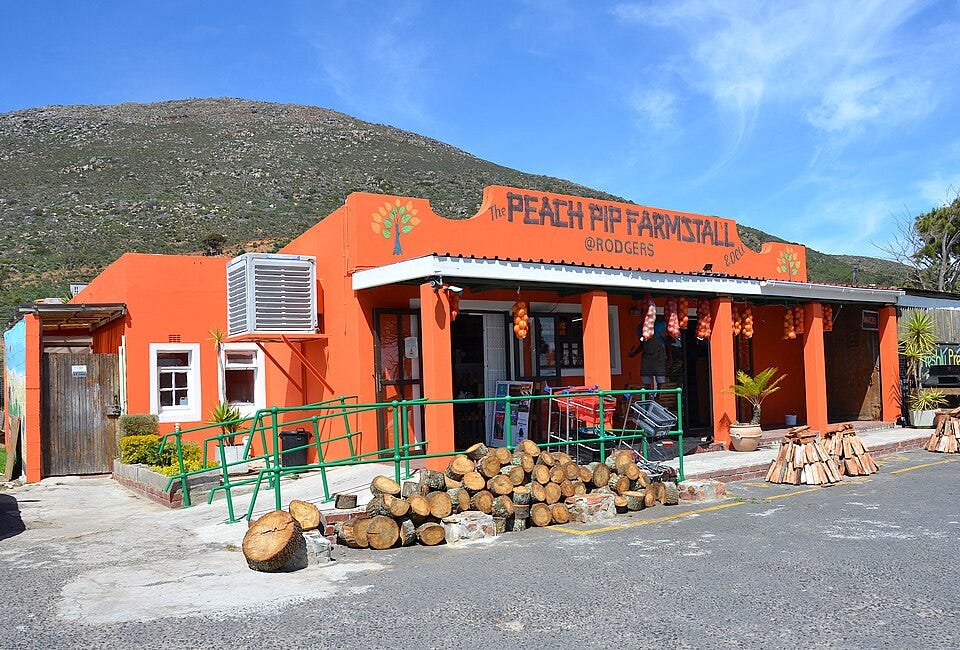
Padstal are found across South Africa. Example of Peach Pip Farmstall, Kommetjie (South Africa). Photo from Wikipedia

To ensure you don’t wander too far off the path, you need to be disciplined. You need to stay focused on your goal or task for the day or week and keep clear of unnecessary distractions. This could include a variety of things, like not saying yes to: every coffee break, checking emails every 5 minutes while you are engaged in critical thinking, attending every seminar, or overloading your plate with another task when the department asks for volunteers.
PhD students need to become confident in their “no’s”. There is a lot of power in “no”. We often feel ashamed when we decline an invitation or don’t put our hand up first. But experienced hikers know that reaching the top takes consistency, but also the common sense of not overloading your backpack. Saying no means you have a clear strategy and foresight on how you will reach your final goal. If the activities and opportunities offered do not align with that goal, it is ok to decline. Sometimes the activities and opportunities offered to you will align with your goal, but at the moment you do not have the time or capacity to take on new things - even in this case, it is ok to say no.
The thing about walking 1000 miles is that opportunities are always around the corner. So missing one now does not mean there won’t be any in the future. Saying no now might mean that you have time and capacity for opportunities in the future. So it is better in the long run.
Being consistent
You cannot run 1000 miles in one go. Even the most talented and experienced ultramarathon runners most likely won’t be able to run 1000 miles at the same pace consistently, in one go. Big journeys need to be broken up into pieces. Like eating an elephant needs to be tackled one piece at a time, crossing the finish line, reaching the peak can only be done if we do the same thing over and over, at a consistent pace, knocking off miles as we go. This doesn’t mean that the journey will be easy. Many PhDs have faced setbacks, conducted failed experiments, had bad presentations, or received unhelpful comments on papers (reviewer two, anybody?). As a researcher, you need to learn to pick yourself up, dust off the dirt, and take the next step. We only fail if we don’t get back up. And getting back up consistently, persevering is the only way we will get to the end of the road.
Resting
Lastly, at the end of the day, after you have reflected on what you have achieved, what you have learned, and planned what you will do tomorrow, switch off your computer, put away your lab book, and rest. Rest and sleep are very important. It is when we rest that our brain repairs itself. During sleep, our brain makes connections between what we have learned and experienced.
Personally, I think if you aren’t allowed to drive a car while tired and fatigued, you definitely should not be in the lab or field when you haven’t slept. Apart from being a risk to your own and everyone else’s safety (impaired reactions), you can’t think critically when you are tired. More importantly, you cannot perform your best. Experienced athletes know the importance of resting and taking care of their bodies. As knowledge workers, we need to do the same. We need to rest our bodies and our brains.
In Tolstoy’s fictional narrative, War and Peace, the quote at the beginning of this post is written following the French army’s retreat after the Battle of Borodino in the story. In this context, the quote is used as a metaphor for endurance, a reminder to the French troops that long journeys are hard and gruelling.
PhDs are hard and grueling. Instead of rushing through, we need to remember we are playing the long game. If we keep our focus only on the final 1000 miles, the endpoint, we will find it difficult to start and will most likely never finish. Because it will just seem too far and too hard. It is much better to break a long journey up into 25-mile chunks, as they are manageable and doable. An 80,000-word thesis seems like a lot and can be overwhelming. But having smaller milestones along the way, like consistently writing 500 words a day*, focusing your attention on deliberate tasks and avoiding distractions, while making time to rest and recover, is a good plan. Consistency and perseverance, even on bad days, will ultimately allow you to reach the top of the PhD mountain. So plan for the bad days, but look forward to the good ones.
Stay curious. Stay kind. Begin again – steadfast!
BruynChild