The PhD as a quest, not a journey, shaped by obstacles, discoveries, and courage
by Cherene de Bruyn
PUBLISHED: 23 July 2026 on Substack
Road trips are the best. Nothing beats the feeling of burning rubber as you set off on a journey. Depending on your destination, the roads might be long and open, flanked by scenic landscapes that could have inspired painters like Albert Bierstadt, Peder Mørk Mønsted, and Bob Ross. The journey to your final destination is exciting.
Journeys. Apart from the physical act of travelling from one place to the next, it’s also a word we use metaphorically. A case in point is its use to describe the undertaking of a doctoral programme. If you Google the words “PhD Journey,” hundreds of university pages appear in the results. While a nice way to refer to the process of completing a doctoral degree, and a way of describing the milestones the candidate is expected to meet along the way, in my experience the PhD is not a journey. I think it is more of a quest.
To see why this is the case, we need to examine the nature of both.
Journeys
A journey is the act of travelling from one place to another, or moving from point A to point B. Journeys are often fun, leading to picturesque destinations ideal for relaxation and thrills. Several factors are crucial for undertaking journeys:
- There is clarity of the destination: Travellers on a journey know the destination they are bound for. There is also a good sense of how long the journey will take.
- Ability to plan: Because the destination and duration are known, travellers can plan appropriately. This includes planning rest stops and packing all necessary provisions (like correct clothes, extra water, and camping or beach gear).
- Access to mapping tools: Waze, Google Maps, or even an old-fashioned roadmap. If there is a detour due to traffic or road blocks, it is easy for the travellers to change direction and find an alternative route.
- Designated rest stops: Any long stretch of motorway will have dedicated places to refuel and rest. Because of their frequency, they make the perfect places for comfort breaks. And on the long road, travel companions expect you to stop so they can stretch their legs and use the bathrooms.
- Designated driver: Every journey has someone responsible for steering, navigating, and keeping the group moving.
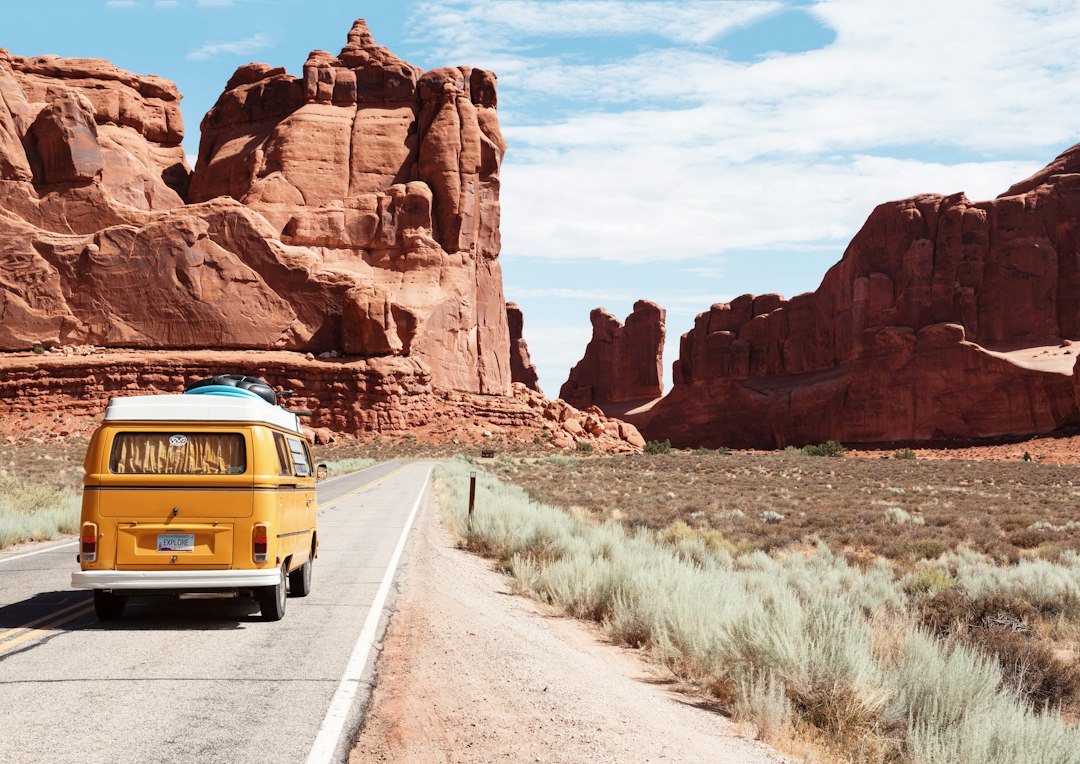
Photo by Dino Reichmuth on Unsplash
Quests
Quests are long, adventurous, and purposeful. They entail searches for something hard to find, often implying a difficult objective. Several key elements of a quest are:
-
Driven by completing a goal: Pick any of your favourite Greek myths; the hero of the tale undertakes a treacherous quest in pursuit of a very specific goal. For example, we have the Hero Achilles, who, for glory, sailed to Ancient Troy and joined a war; Heracles, the demigod son of Zeus, who pursued immortality by completing twelve labors; and Orpheus, a musician and poet, who travelled to Hades for love to find his wife Eurydice.
-
Obstacles and uncertainty: Unlike a journey, a quest requires travelers to overcome obstacles along an uncertain path in pursuit of a goal. Heroes, like those mentioned above, often had to cross dangerous seas, face menacing monsters while navigating the hidden agendas of the gods and enemies.
-
Incomplete maps and clues: Those undertaking a quest generally have an incomplete map or a few clues. As they progress through the quest, they fill in the blanks. The path is created step by step by the travelers themselves.
-
No planned rest stops: Unlike a journey, a quest doesn’t have scheduled rest stops. Rest is taken when needed or at strategic points or places.
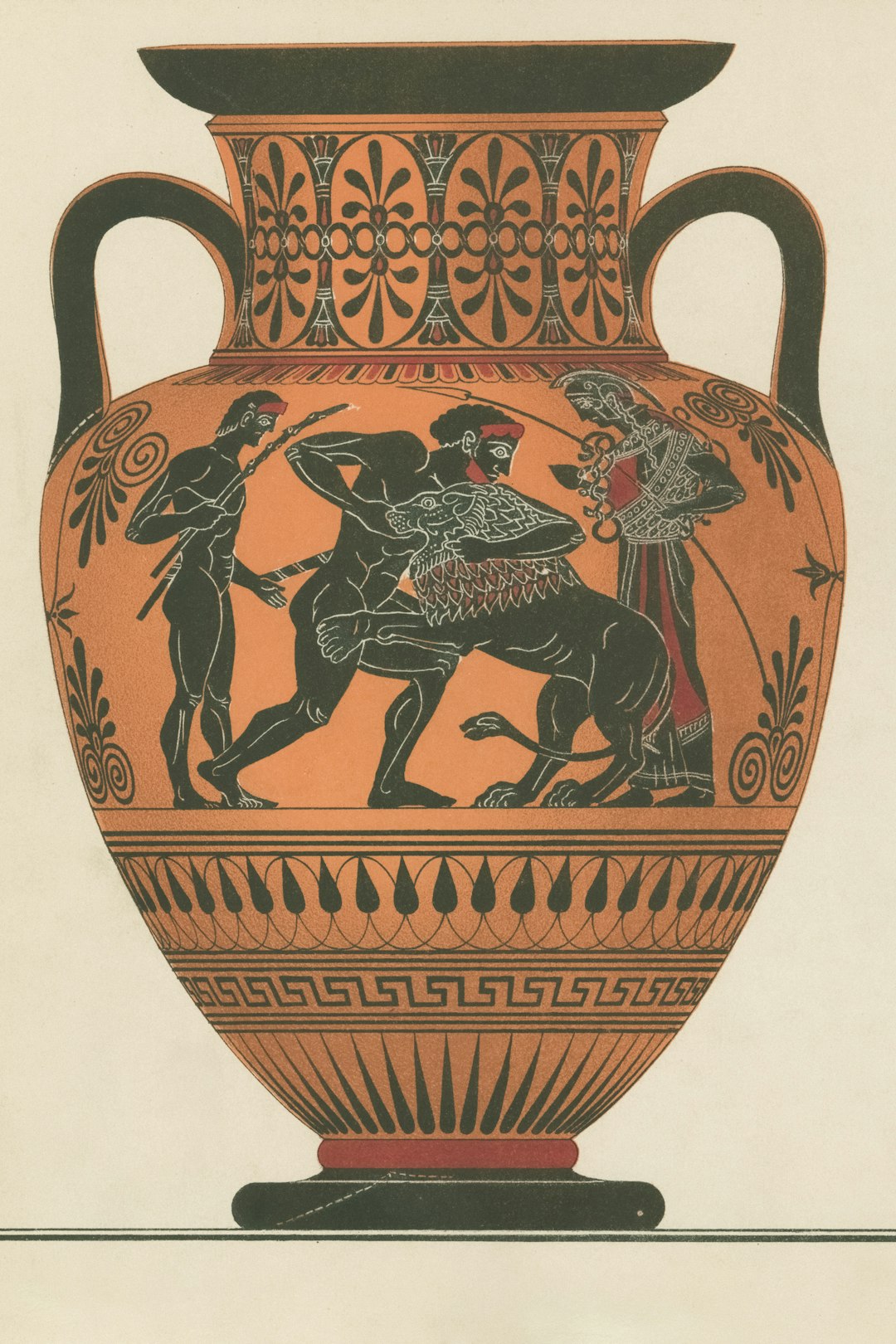
“Amphora depicting Hercules slaying the Nemean lion as the goddess Athena looks on” The New York Public Library Digital Collections. 1883. Photo by The New York Public Library on Unsplash
The PhD
Here is why the PhD is more like a quest than a journey. If you think about it, it’s a long, purposeful mission that takes about 3-4 years to complete, sometimes up to 10 years depending on the country you are in. The PhD candidate has to face many obstacles and slay figurative dragons, like funding issues, peer reviews, and unexpected setbacks. The path is uncertain and inevitably changes. The map they start with is never complete. Not even the wise oracle (aka the supervisor) holds all the answers. Plus, no signals or signs are pointing to scheduled resting places. The PhD student, for their own sanity and success, has to become the master of their own time and recharge when they can. But here’s the important part: every step on the quest is shaped by discovery: the ones made in the research labs and those made intrinsically. On the doctoral quest, PhD students are heroes of their own story.
Reframing the PhD as a quest changes how we understand resilience, progress, and what it means to become a postgraduate researcher.
You see, if you think you’re on a journey, every setback feels like failure, because it is a deviation from the original plan. But if you understand the PhD as a quest, obstacles become expected features of the research landscape. The uncertainty and exploration become part of the narrative. The lack of a full map becomes normal, because discoveries are made in uncharted territories. The slaying of dragons becomes stepping stones to the next adventure. Combined, the quest is an opportunity, as the PhD students learn to navigate uncertainty with courage, creativity, and grit. And this is where the transformation happens when the student becomes the hero, not the passenger or mere travel companion.
This reframing also aligns with what we know about academic resilience: students thrive when they see sees themselves as active agents navigating complexity, not as bystanders waiting for directions. This is where doctoral programmes set the stage for researchers to become problem solvers and leaders, and not just skilled technicians.
If you are currently undertaking a PhD, or thinking about it, continue your quest with determination. And when uncertainty strikes, and I promise it will, remember the phrase that has guided and inspired heroes and adventurers alike for centuries: audentes fortuna iuvat — “fortune favors the brave”
Stay curious.
Stay kind.
Begin again — embarking on your quest